
Reuse Economy
The Reuse Economy: Nothing is wasted. It is simply redirected.
The reuse economy transforms what you no longer need into opportunity, access, and impact around the world.
What is the Reuse Economy?
The reuse economy is built on a simple but powerful idea. That is, products don’t need to be thrown away after one use.
Instead of discarding items, they can be collected, redistributed, and used again. This extends their life, reduces waste, and creates immediate value for others.
Unlike recycling, which often breaks products down into raw materials, reuse keeps products intact and functional. In turn, that means less energy, fewer resources, and faster impact.
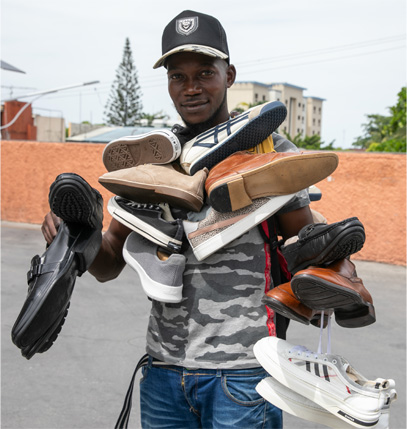
A single pair of sneakers can move from one person’s closet to another person’s livelihood.
In sum, that’s how waste becomes opportunity.
Where do the shoes go?
When you collect shoes and sneakers through programs like Sneakers4Good or Funds2Orgs, they don’t end up back in local resale markets or landfills.
Instead, they’re sent to a global network of micro-entrepreneurs in developing countries.
These small business owners rely on secondhand goods to build income, support their families, and serve their communities. Sneakers are cleaned, displayed, and sold in local markets where access to affordable footwear is limited.
What you once wore for a run or a workout can become someone else’s opportunity to work, travel, and live.
This is not charity, but it’s a system that supports independence and economic mobility.
Turning shoes from closets across the country into fundraising opportunities while reducing waste.
Helping runners and athletes give sneakers a second life while supporting sustainability and global communities.
Over
pairs of sneakers kept out of landfills.
More than
paid to sustainability partners and their local charities.
Empowers
microentreprenuers in the reuse economy.
Supported by
reuse partners and drop-off locations nationwide.
The Environmental Impact of Reuse
Every product we reuse is one less product that needs to be manufactured and one less item sitting in a landfill.
In the United States alone, over 300 million pairs of shoes are thrown away each year. Most will sit in landfills for decades, slowly breaking down and releasing harmful materials into the environment.
Reuse changes that.
By extending the life of existing products, we reduce demand for new production, conserve natural resources such as water, and lower carbon emissions associated with manufacturing and transportation.
It is one of the simplest and most immediate ways to reduce environmental impact.
Reuse vs Recycling
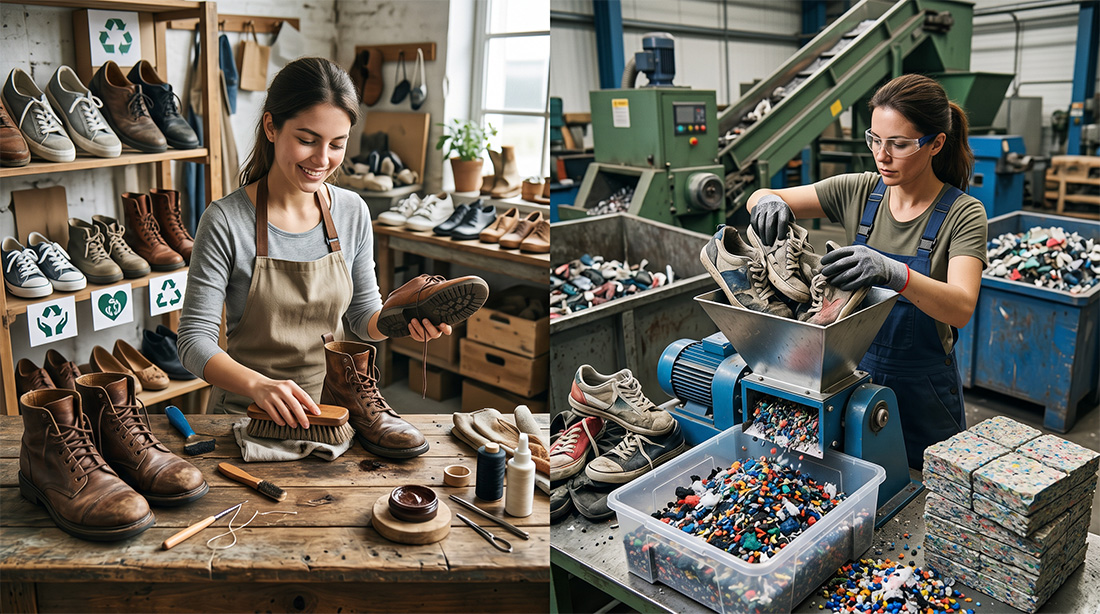
Recycling is important, but reuse is often more effective. Recycling breaks products down into raw materials so they can be remade. But this process requires energy, water, and additional resources.
Instead, reuse keeps products whole.
In turn, that means no breakdown process, no additional manufacturing, and no delay in impact. So, a reused product can be back in circulation almost immediately, serving someone new without starting from scratch.
If recycling is about rebuilding, reuse is about continuing.
And continuing is often the more sustainable choice.
How to Get Involved
Your Role Starts Here
The reuse economy only works when people choose to participate.
The good news is that getting involved is simple, and you already have what you need.
Start by looking at what you no longer use. Consider this, those items still hold value.
Ways to Get Involved:
- Give your sneakers a second life through Sneakers4Good
- Start a shoe drive with Funds2Orgs
- Encourage your workplace, gym, or community to participate
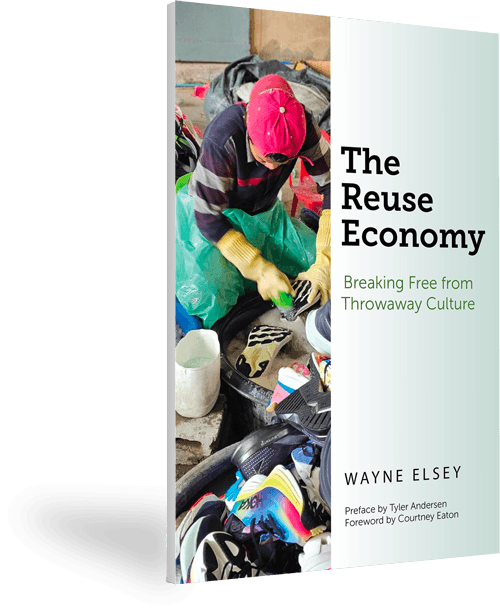
- Learn more by reading The Reuse Economy: Breaking Free From Throwaway Culture
The Reuse Economy is Not About Doing More.
It’s about wasting less and seeing more value in what already exists.